


Most advice on how to make money creating apps is outdated the moment it starts talking about raising money, hiring a full team, and building a bloated feature set before anyone has paid for anything. That playbook still exists, but it isn't the only path. For solo founders and small U.S. teams, it's often the wrong one.
The more practical path is narrower and less glamorous. Pick a specific problem, solve it for a specific identity-based niche, charge for a recurring outcome, and use AI and no-code tools to compress build time. Recent examples show this is not theoretical. Apps launched within the last 180 days have reached $50K+ MRR by targeting niches like AI video generation or Bible note-taking with simple AI interfaces, and 10 unknown apps did it in under a year, according to this YouTube analysis of niche AI app opportunities.
That matters because the old assumption was that you needed $50K to $500K just to get in the game. In practice, many profitable apps don't win because they're the most technically impressive. They win because they do one job clearly, they target buyers with real intent, and they charge in a way that matches the value users feel quickly.
I've seen the same pattern repeatedly. Founders lose money when they treat app building like a product design exercise. They make money when they treat it like a distribution and monetization problem from day one.
Beyond the App Store Lottery
The biggest mistake in app businesses is treating discovery like the business model. Ranking in the App Store can help, but it is rarely the reason a small team gets to real revenue. Profitable apps usually win before anyone searches for them. They target a narrow buyer, solve an expensive annoyance, and convert that value into recurring payments.
That changes how a solo founder should think about the market. The goal is not broad appeal. The goal is a product a specific group will keep opening because it saves time, reduces friction, or helps them perform better at something they already care about.
What small teams get wrong
A lot of founders start with a label instead of a buyer. They decide to build "a fitness app" or "an AI app" and only later try to figure out who will pay. That path creates crowded positioning, vague messaging, and weak retention.
Small teams do better with a tighter frame:
- Choose an identity-based user: not students, but nursing students preparing for licensure
- Choose one repeating problem: not productivity, but turning lecture recordings into revision notes
- Choose a spending behavior: users already paying for speed, convenience, compliance, status, or measurable outcomes
The spending behavior matters because it reveals whether a market has money in motion. If people are already cobbling together spreadsheets, paying for coaching, buying templates, or wasting hours on manual work, they are showing demand. If they only say the idea sounds cool, that is not a market.
I have watched founders burn months polishing features for users who were never likely to pay. The pattern is common. They optimize onboarding, redesign the interface, add AI, and still cannot grow revenue because the underlying problem was too optional.
Big companies often ignore small, high-intent niches because they need larger markets. That leaves room for solo founders and small U.S. teams to build profitable apps without raising a large round or hiring an agency.
The better business model
For small teams, the safer bet is usually a focused utility or workflow app with recurring value. Ads reward scale. Niche subscription apps reward relevance. If the product helps users complete a repeated task, make a faster decision, stay organized, produce content, or track progress, subscription revenue becomes far more realistic.
That is where modern AI and no-code tools change the equation in a practical way. Replit, Bubble, Glide, FlutterFlow, and AI coding assistants cut prototyping time, reduce engineering overhead, and let founders test monetization before they commit to a full build. The trade-off is real. You move faster, but you need discipline around scope, performance, and what should eventually be rebuilt in a more flexible stack.
The opportunity is not chasing a breakout hit with millions of downloads. It is building a narrow app that a few thousand right-fit users in the U.S. will pay for every month. That is how small teams get to meaningful MRR without depending on App Store luck.
First Validate Demand Not Just Your Idea
The fastest way to waste money in apps is to confuse interest with demand. Friends saying they'd "totally use this" means nothing. A waitlist with no activation plan means little. What matters is whether a real audience has a painful problem, poor alternatives, and a reason to pay now.

The risk is severe. 99.5% of consumer apps fail to become successful, and the most reliable fix is better pre-launch validation, not faster coding, according to this Start.io breakdown of app monetization and validation.
Use the five-phase sequence
The most disciplined founders follow a sequence that reduces expensive mistakes:
Discovery
Define the user, the problem, the essential job, and the narrowest feature set that solves it.Wireframes
Sketch the key screens and user flow. This exposes complexity before code does.Prototypes
Build something clickable. Test comprehension, not polish.Designs
Turn the useful flow into something trustworthy and easy to use.Development
Write or generate the production code only after the first four steps are stable.
The most important part is the MVP. Keep it to one or two core features. That's not minimalist ideology. It's financial control.
What validation actually looks like
Good validation is specific and inconvenient. It requires talking to people who might buy, not people who want to encourage you.
A practical validation loop looks like this:
- Start with a niche where pain is visible: examples include creators who need faster editing, hobbyists who need better identification tools, or professionals who need recurring organization.
- Audit competitors with app intelligence tools: Sensor Tower is useful for spotting categories, positioning patterns, weak reviews, and feature gaps in the U.S. market.
- Read complaints, not praise: app reviews, Reddit threads, Discord channels, and niche Facebook groups reveal unmet demand faster than broad surveys.
- Test willingness to pay early: use a landing page, pre-order interest form, or concierge workflow before building the app itself.
- Ask for behavior, not opinions: "Would you pay for this next week?" beats "Do you like this idea?"
A short prototype walkthrough can help you pressure-test the concept before you build too much.
Discovery questions that actually matter
I use a simple screen for early ideas:
| Question | Why it matters |
|---|---|
| Who feels this problem often? | Frequency drives retention |
| What are they using now? | Existing workarounds reveal urgency |
| Why are current tools bad? | Gaps create positioning |
| What is the one promised outcome? | Clear value makes pricing easier |
| Can the MVP solve that in one session? | Fast time-to-value improves conversion |
Practical rule: if your value proposition takes five minutes to explain, your app is probably too broad.
Validation isn't glamorous. It also saves months of wasted build time.
Choosing Your App Monetization Engine
Monetization isn't a checkout screen. It's the engine underneath the product. Pick the wrong one and you'll create friction, attract the wrong users, or trap yourself in a model your product can't support.

One mistake shows up constantly. Founders price by feature count instead of user outcome. That's backwards. Strong monetization maps price to the job the app helps the user complete, as explained in this Xero guide to app monetization models and pricing pitfalls.
App Monetization Model Comparison
| Model | Best For | Revenue Potential | User Experience Impact | Implementation Complexity |
|---|---|---|---|---|
| Subscription | Ongoing workflows, utilities, content, AI tools | Strong if value repeats | Good when the value is clear and frequent | Moderate |
| In-app purchases | Games, creative tools, digital upgrades | Strong when users buy repeatedly | Can feel smooth or annoying, depending on timing | High |
| Advertising | Large audiences with low willingness to pay | Depends on scale | Often weakens focus and product feel | Low to moderate |
| Freemium | Products with a clear free-to-paid path | Good if upgrade triggers are obvious | Usually strong for trial | Moderate |
| Paid app | Simple utilities with immediate value | Limited for most consumer apps | Clean experience after purchase | Low |
For a deeper strategic overview, this roundup of app monetization strategies is useful when you're comparing model fit against product type.
What works best for solo founders
If you're a solo founder building a niche app, subscription usually wins. It aligns with recurring value, supports continuous improvement, and doesn't require huge scale to become meaningful.
Subscription is a strong fit when the app helps users:
- return weekly or daily
- save time repeatedly
- generate or interpret something new
- track progress over time
- access a changing stream of value
A Bible note-taker, AI image analyzer, golf swing review app, or pet health tracker fits this pattern better than a one-time novelty app.
The trade-offs founders underestimate
In-app purchases can be lucrative, especially in games and creative products, but they take more work than is commonly believed. You need careful entitlement handling, clean fulfillment logic, and UX that doesn't interrupt the core experience.
Advertising looks easy, but it often masks a weak business. Ads can work for broad free apps, yet they usually push founders toward chasing volume instead of serving a valuable niche.
Paid downloads feel appealing because they're simple. The problem is that they limit acquisition and leave less room for upsell or expansion.
Freemium works when the boundary is obvious. If users can't tell why they should upgrade, they won't.
Price the result, not the menu of features. People don't buy "Pro Tier." They buy faster output, better decisions, or less manual work.
A simple decision filter
Ask these three questions before you choose:
- Does the user get repeated value? If yes, subscription is the front-runner.
- Do users buy optional enhancements inside the workflow? That points toward IAP.
- Do you need huge reach to earn meaningful revenue? If yes, advertising may be required, and that's a harder road for a small team.
For most niche U.S. app businesses built with AI and no-code tools, the answer is simple. Start with subscriptions. Add other models only when user behavior proves they fit.
Pricing Analytics and Key Revenue KPIs
Pricing mistakes don't kill niche apps on day one. They kill them slowly, by attracting the wrong users, capping expansion, and hiding retention problems behind decent install numbers.

Small U.S. teams have an advantage here. They can change price, packaging, onboarding, and paywalls in days instead of waiting on an agency roadmap or a six-month rebuild. That speed matters more than having a perfect price on the first try.
Price around outcomes, not feature counts
The right pricing question is simple. What is the user getting that is valuable enough to pay for every month?
For a niche AI app, that answer is usually tied to time saved, decisions improved, or work completed with less effort. A golf swing app is not selling video storage. It is selling better feedback and faster improvement. A resale app is not selling image uploads. It is selling pricing confidence. A solo founder who understands that difference will usually outprice a bigger competitor that packages around features.
Early on, simpler wins.
A good starting structure for a small team is often:
- free access with a clear usage limit
- one paid plan for the main job the app does
- a higher tier only if heavier users need more volume, automation, or team features
More tiers create more comparison work for the user. Early-stage apps rarely have enough evidence to justify that complexity.
Instrument the revenue path before you optimize it
A lot of founders debate price before they can answer basic questions. Where do qualified users drop off? Which acquisition source converts into subscribers? Which onboarding step predicts retention after week two?
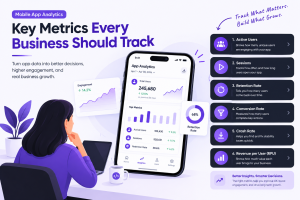
Set up event tracking first. Use tools like Firebase, RevenueCat, Mixpanel, Amplitude, or the analytics layer inside your no-code stack. Track the actions that connect acquisition to revenue, not just vanity events like installs and screen views.
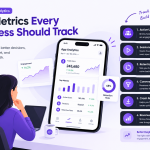
For subscription apps, these are the numbers that matter most:
| KPI | What it tells you |
|---|---|
| ARPU | Revenue per user across the full base |
| ARPPU | Revenue per paying user |
| Trial-to-paid conversion | Whether the paywall, onboarding, and value promise are working |
| Churn | Whether users keep getting recurring value |
| LTV | How much revenue a customer is likely to generate before they leave |
| Payback period | How long it takes to recover acquisition cost |
If you want a practical reference for setting up and reading these numbers, this guide to mobile app metrics and KPI tracking is useful.
Read the pattern, not just the metric
One metric in isolation can send you in the wrong direction.
High install volume with weak trial-to-paid conversion usually points to one of three problems: the traffic is poorly matched, the paywall asks too early, or users do not hit the core value moment fast enough.
Strong conversion with high churn means the promise sold, but the product did not become part of the user's routine. That is a retention problem, not a top-of-funnel win.
Low ARPPU often means pricing is conservative or the premium tier is too weak. Low ARPU often means the free plan attracts interest without creating enough pressure to upgrade.
I look for one question first. Are the right users getting to value quickly enough to justify the price? If the answer is no, changing the number on the paywall will not fix the business.
Use pricing as a product decision
Pricing is not a finance exercise you handle after launch. It is part of product strategy.
For solo founders and small teams trying to reach $50K+ MRR, the practical path is usually a narrow niche, a clear paid outcome, and weekly review of conversion, churn, and expansion. Raise price when retention is strong and usage depth is obvious. Simplify packaging when users hesitate. Cut features that add cost but do not improve willingness to pay.
Profitable apps are rarely the ones with the longest feature list. They are the ones where pricing, onboarding, and retention fit together cleanly.
Your Go-To-Market and Growth Playbook
A good app with no distribution is a hobby. Founders usually don't fail because the product was impossible to monetize. They fail because nobody saw it, or the wrong users saw it.

The right early growth strategy for a small team isn't expensive broad marketing. It's tight distribution around the niche you validated.
Start with channels that match the niche
The best launch channels are usually the places where your target users already complain, compare tools, and recommend solutions:
- Reddit communities: useful when your app solves a visible pain point and you can participate credibly
- Micro-influencers: strong when trust matters more than reach
- Product Hunt: useful for maker-friendly, productivity, AI, and utility tools
- Niche newsletters and podcasts: often overlooked, often effective
- App Store Optimization: slow, compounding, and worth doing early
This practical guide to a mobile app user acquisition strategy pairs well with a lean launch plan when you need a channel-by-channel checklist.
ASO for founders who don't want to waste time
ASO isn't about stuffing keywords. It's about making the store page answer three questions quickly:
- Who is this for?
- What problem does it solve?
- Why is it better than the alternatives?
Your app title, subtitle, screenshots, preview video, and first review cohort all shape that answer. Founders often overinvest in icon tweaks and underinvest in screenshot messaging. That's backwards. Screenshots should show the use case, not just the interface.
Micro-influencers beat generic awareness
For niche subscription apps, small creators can outperform broad audiences because they deliver context and trust. A creator speaking to RV enthusiasts, pet owners, golfers, or faith communities can explain why the app matters in a way paid ads often can't.
A simple outreach pattern works:
- identify creators already discussing the problem
- give them free access and a direct reason to care
- ask for honest use, not scripted praise
- give them a clean demo flow and messaging angle
- track which audience sends users who retain
Use launch as a learning event
The first launch shouldn't be treated like a one-day verdict. It should be treated like structured market feedback.
A strong lean launch cadence includes:
- Pre-launch list building: collect users by niche and intent, not one giant generic waitlist
- Founding-user onboarding: personally help early users get value fast
- Review collection: ask only after the product has delivered something concrete
- Community observation: watch support questions, objections, and surprise use cases
- Message iteration: rewrite your store copy and landing page based on the language users use
Early growth isn't about reaching everyone. It's about finding the users who say, "This was built for me."
That's the group that teaches you how to grow.
Navigating US Legal Privacy and Payments
A lot of app businesses get sloppy here because legal and payment setup feels like overhead. It isn't. If users don't trust your app, subscription revenue gets harder. If your policies are vague, platform reviews and customer issues get more painful.
Keep the business basics clean
U.S. founders usually need a simple, defensible operating structure before revenue starts flowing. In practice, that often means setting up a business entity, separating business banking from personal spending, and keeping clean records for app store payouts and software expenses.
You also need your terms to match the product you run. If the app collects user content, uses AI to generate outputs, stores account data, or charges recurring fees, your Terms of Service and Privacy Policy should say so clearly.
Founders often copy generic legal templates and never update them. That's risky. If your product changes, your policies need to change too.
Privacy is part of the product
For U.S. apps, privacy compliance isn't just a legal checkbox. It affects conversion. Users are more willing to subscribe when they understand what data you collect, why you collect it, and what control they have over it.
At a minimum, think through:
- What user data is collected: account details, payments, uploads, analytics events, AI inputs
- Where it flows: app store, analytics tools, backend services, AI providers
- What the user can request: access, deletion, or account closure
- How consent is handled: especially for tracking, marketing, and sensitive user data
If you're targeting users in California, founders usually pay close attention to CCPA and CPRA obligations. Even if your app starts small, building transparent data practices early is easier than retrofitting them later.
Payment setup needs more thought than most teams give it
For iOS and Android apps, you need to configure products properly in App Store Connect and Google Play Console, then connect those products to your app logic. Subscription duration, entitlement access, trial messaging, cancellation handling, and restore purchases all affect trust.
Here, many first-time founders create avoidable churn. The purchase works, but the post-purchase experience is confusing. Users don't know what they bought, how to manage it, or what happens when they cancel.
Keep the payment flow boring in the best way. Clear product names. Clear benefit statements. Clear renewal language. Clear account access after purchase.
Users forgive a simple product. They don't forgive a payment experience that feels unclear.
If you're serious about building a durable app business, legal, privacy, and payments belong in the first release plan, not the cleanup list.
From Launch to Profitability A Checklist
Launch is not the milestone that matters. The work that decides whether an app becomes a business starts after the first users arrive.
Profitable apps usually run on a tight operating loop. Ship a focused version. Watch where users get stuck. Cut friction. Improve the part people pay for. Remove the features nobody values. If the wrong audience is showing up, change the positioning before you change the product.
For solo founders and small U.S. teams, this is an advantage. You do not need an agency, a large roadmap, or six months of custom development to reach product-market fit. You need a narrow problem, a fast build cycle, and enough instrumentation to see what is working. AI tools and no-code stacks make iteration cheaper. They do not remove the need for judgment.
The checklist I would use
- Validate the niche before building heavily: talk to buyers, review competitor complaints, and confirm a problem that shows up repeatedly
- Ship a narrow MVP: one or two features are enough if they solve the core job well
- Pick one monetization model: subscription is often the cleanest fit for a focused utility or workflow app
- Set up analytics on day one: track trial starts, activation, conversion, retention, churn, and refund patterns
- Run a focused launch: niche communities, direct outreach, creator partnerships, and founder-led onboarding usually beat broad paid acquisition early
- Watch retention harder than installs: high download counts can hide a weak business
- Refine pricing around outcomes: users should understand what they get and why it is worth paying for
- Fix trust blockers early: privacy copy, billing terms, cancellation handling, and onboarding confusion affect revenue fast
- Pivot based on behavior: if one segment retains and another churns, build for the segment that stays
- Use crowdfunding selectively: Kickstarter or Indiegogo can work for consumer apps with a clear promise and strong community interest
When to pivot instead of pushing harder
A weak result does not always mean the product is bad. It often means the offer is too broad, the promise is unclear, or the paid value sits in the wrong place.
Good pivot signals look like this:
| Signal | Likely issue |
|---|---|
| Users try it but don't return | weak recurring value |
| They use one feature and ignore the rest | product is too wide |
| Feedback is positive but buying is low | pricing is off or the problem lacks urgency |
| One subgroup retains far better than everyone else | the real niche is narrower than expected |
I have seen small teams waste months adding features to fix what was really a positioning problem. The better move was to cut half the roadmap, rewrite the promise, and serve the users already getting value.
Community funding can strengthen a good niche
Crowdfunding is not a default growth tactic. It is useful when the app has a concrete outcome, a story people care about, and an audience that wants to participate early.
That usually fits consumer apps better than workflow tools. If backers cannot understand the result in one sentence, the campaign will struggle no matter how polished the page looks.
The founders who build durable app businesses treat launch as the start of operations. They keep the product narrow, the pricing clear, the feedback loop short, and the roadmap tied to retention instead of noise.
If you're building a mobile product for the U.S. market and want sharper guidance on strategy, monetization, UX, and launch execution, Mobile App Development offers practical resources for founders and teams turning app ideas into real businesses.



Add Comment