

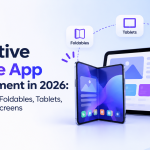
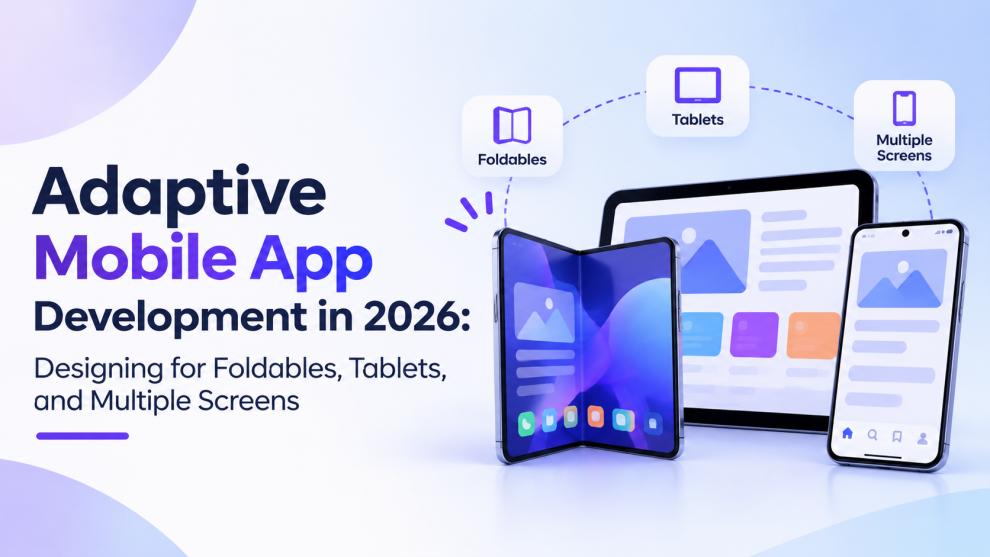

Mobile applications are no longer used only on traditional smartphones. Foldable devices, tablets, and larger screens are changing how people interact with digital products.
As device formats evolve, businesses need applications that can adjust their layouts and functionality without compromising usability. This makes adaptive mobile app development an important consideration in 2026.
What Is Adaptive Mobile App Development?
Adaptive app development focuses on creating experiences that respond to different screen sizes, orientations, device capabilities, and usage contexts.
Instead of simply stretching a smartphone layout across a larger screen, developers design interfaces that make effective use of the available space.
5 Important Practices for Adaptive Apps
1. Design Flexible Layouts
Use responsive grids, flexible components, and appropriate breakpoints. Ensure content remains readable and controls remain accessible across screen sizes.
2. Support Foldable Devices
Account for folding states, changing screen dimensions, and hinge areas. Applications should transition smoothly between folded and unfolded experiences.
3. Improve Tablet Experiences
Take advantage of larger displays with multi-column layouts, split views, side panels, and improved multitasking where appropriate.
4. Maintain Continuity Across Devices
Users should be able to continue important tasks when switching between supported device formats. Preserve relevant application state and avoid unnecessary interruptions.
5. Test Real Device Behavior
Emulators are useful, but testing on physical phones, tablets, and foldable devices helps identify layout problems, interaction issues, and performance limitations.
Technologies for Adaptive App Development
Frameworks such as Flutter and React Native support cross-platform application development, while native Android and iOS capabilities can help teams address platform-specific behavior.
The technology choice should depend on performance requirements, device features, team expertise, and long-term maintenance needs.
Why Businesses Should Consider Adaptive Apps
Adaptive experiences can improve usability, support a wider range of devices, and help businesses prepare their products for changing user expectations.
Development partners such as GeekyAnts can help businesses connect mobile product strategy, UI/UX design, and application engineering when planning cross-platform experiences.
Final Thoughts
The future of mobile development is not limited to making apps work on more devices. It is about making applications feel natural on each device.
Businesses that prioritize adaptive layouts, device continuity, and real-world testing can build more flexible mobile experiences for 2026 and beyond.



Add Comment