




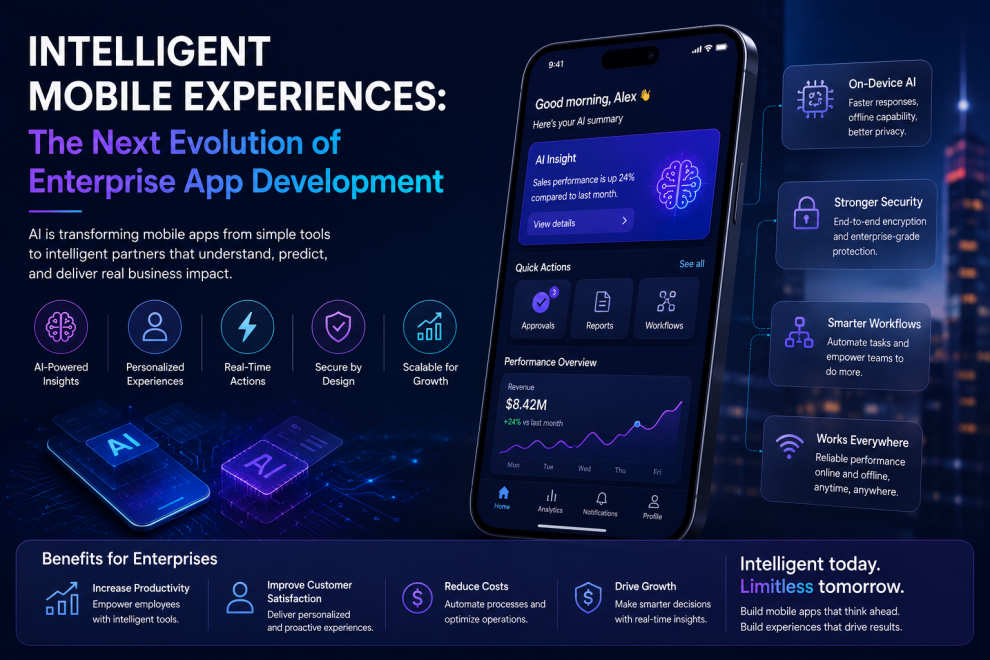

Enterprise mobile applications are no longer limited to providing access to business systems. They are evolving into intelligent digital platforms that help employees make decisions, automate routine work, and deliver highly personalized customer experiences.
As artificial intelligence becomes a core part of enterprise technology strategies, mobile development is shifting toward building applications that understand users rather than simply responding to their actions.
Why Intelligent Mobile Experiences Matter
Modern users expect mobile applications to anticipate their needs.
Instead of searching through menus or completing repetitive tasks, users increasingly expect applications to provide relevant recommendations, automate workflows, and surface important information at the right moment.
These capabilities improve efficiency while creating more engaging digital experiences.
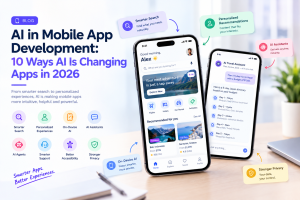
AI Is Changing Mobile Development
AI enables enterprise mobile apps to deliver:
- Personalized recommendations
- Smart search capabilities
- Predictive notifications
- Voice-enabled interactions
- Real-time analytics
- Workflow automation
Rather than replacing traditional functionality, AI enhances existing user journeys by reducing effort and improving decision-making.
Scalability Starts with Architecture
As AI-powered features become more sophisticated, enterprises need architectures that support continuous innovation.
Key priorities include:
- API-first development
- Cloud-native infrastructure
- Secure data synchronization
- Modular application design
- Cross-platform consistency
- Continuous performance optimization
Building with scalability in mind ensures applications remain adaptable as business requirements evolve.
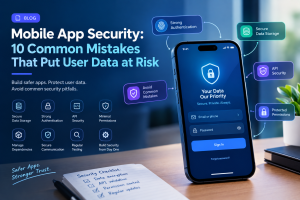
Security Is Essential
Enterprise applications frequently process sensitive operational and customer data.
Organizations should embed security into every stage of mobile development by implementing:
- Strong authentication
- End-to-end encryption
- Secure API management
- Privacy-first AI workflows
- Compliance monitoring
Trust is one of the most valuable features any enterprise application can offer.
User Experience Drives Long-Term Adoption
The most advanced AI models deliver little value if employees or customers find applications difficult to use.
Successful enterprise mobile apps prioritize:
- Simple navigation
- Fast performance
- Context-aware interactions
- Clear AI explanations
- Accessible interfaces
- Consistent design across devices
This combination improves user adoption while reducing support and training costs.
Industry Perspective
Enterprise organizations are increasingly adopting integrated product engineering approaches where mobile development, UX design, AI, and cloud infrastructure evolve together. Companies such as GeekyAnts have publicly highlighted enterprise solutions across industries including healthcare, retail, fintech, and SaaS, reflecting a broader trend toward building intelligent mobile products designed for scalability and long-term business value.
Conclusion
Enterprise mobility is entering a new era where intelligence is becoming a fundamental capability rather than an optional feature.
Organizations that invest in scalable architecture, responsible AI, and exceptional user experience will be well positioned to build mobile applications that improve productivity, strengthen customer engagement, and support sustainable digital transformation.



Add Comment