


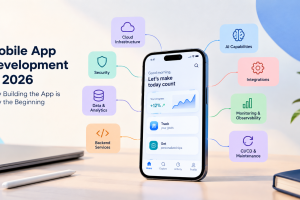
Building an enterprise mobile application is no longer just a software project. Modern mobile platforms must integrate AI capabilities, cloud infrastructure, enterprise security, analytics, and scalable architectures while delivering exceptional user experiences.
This implementation playbook outlines the practical steps organizations should follow to successfully deliver enterprise-grade mobile applications.
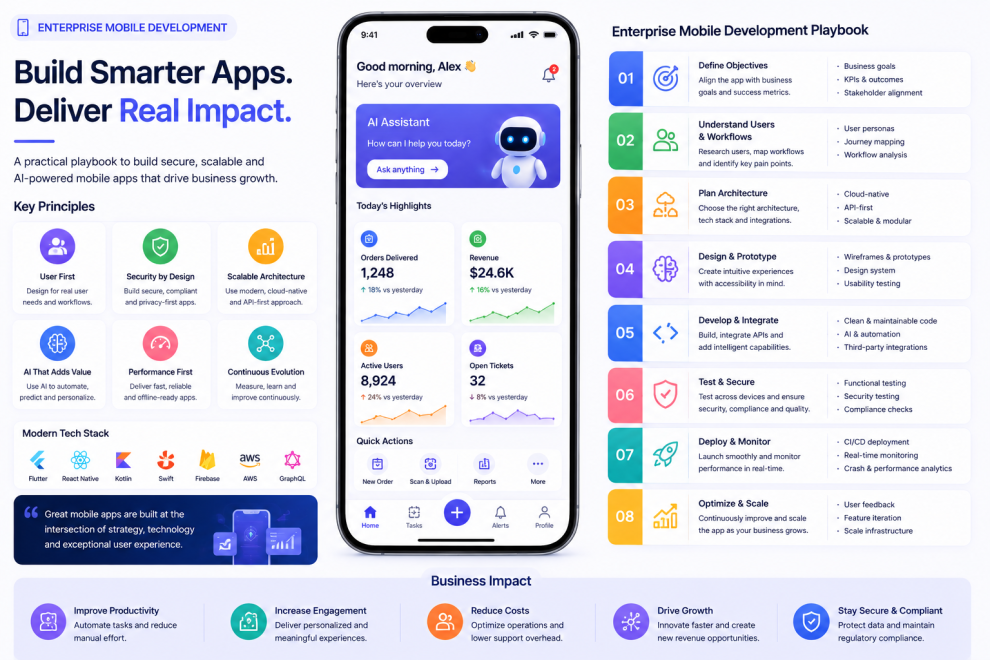
Step 1: Define Business Objectives
Every successful mobile initiative begins with measurable business goals.
Typical objectives include:
- Improving employee productivity
- Enhancing customer engagement
- Automating field operations
- Modernizing legacy workflows
- Increasing operational visibility
Technology decisions should always support these outcomes.
Step 2: Identify Users and Workflows
Development teams should understand:
- User roles
- Business processes
- Daily tasks
- Pain points
- Security requirements
- Compliance obligations
Clear workflow mapping reduces unnecessary complexity later in development.
Step 3: Select the Right Architecture
Enterprise applications typically benefit from:
- Cloud-native infrastructure
- API-first development
- Microservices
- Cross-platform frameworks
- Secure authentication
- Scalable backend services
A flexible architecture supports future growth without major redesigns.
Step 4: Integrate AI Thoughtfully
AI should improve user productivity rather than becoming a novelty.
High-value capabilities include:
- Intelligent search
- Workflow recommendations
- Predictive analytics
- AI-powered assistants
- Automated summaries
- Smart notifications
Prioritize explainability and user control alongside automation.
Step 5: Prioritize Security
Enterprise mobile applications should include:
- End-to-end encryption
- Multi-factor authentication
- Role-based permissions
- Secure APIs
- Compliance monitoring
- Continuous vulnerability testing
Security must be integrated throughout development rather than added later.
Step 6: Test at Scale
Before launch, validate:
- Performance
- Offline functionality
- Device compatibility
- Accessibility
- API reliability
- User experience
Comprehensive testing improves long-term stability and adoption.
Step 7: Measure Success After Launch
Post-launch success should be monitored using:
- Active users
- Feature adoption
- Crash rates
- Performance metrics
- Customer satisfaction
- Business KPIs
Continuous optimization keeps applications aligned with changing business needs.
Industry Perspective
Enterprise organizations are increasingly combining mobile engineering, AI, UX design, cloud infrastructure, and DevOps into unified product engineering practices. Companies such as GeekyAnts have publicly demonstrated enterprise mobile projects that reflect this broader industry movement toward building secure, scalable, and AI-ready mobile platforms.
Final Thoughts
Successful enterprise mobile applications are built through careful planning, scalable architecture, strong security, and continuous improvement.
Organizations that follow a structured implementation approach will be better equipped to deliver mobile experiences that scale with business growth, support digital transformation, and generate long-term value.



Add Comment