


Selecting the right mobile app strategy is one of the most important technology decisions enterprise organizations make. A poor architectural choice can increase development costs, reduce scalability, and limit future innovation. The right approach creates a foundation for long-term growth, security, and performance.
This decision framework outlines the key considerations enterprise leaders should evaluate before beginning a mobile application initiative.
Step 1: Define Business Priorities
Technology decisions should begin with business objectives rather than development tools.
Organizations commonly prioritize:
- Customer engagement
- Employee productivity
- Operational efficiency
- Digital transformation
- Revenue growth
- Process automation
Clear objectives guide every technical decision that follows.
Step 2: Evaluate User Requirements
Understanding users helps determine the application’s complexity.
Questions include:
- Who will use the application?
- How frequently will they access it?
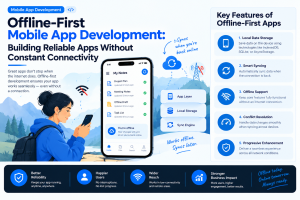
- Is offline functionality required?
- Will AI capabilities improve workflows?
- Which devices must be supported?
These answers shape both architecture and user experience.
Step 3: Assess Technical Requirements
Enterprise applications typically require:
- Secure authentication
- API-first architecture
- Cloud-native infrastructure
- Cross-platform compatibility
- High availability
- Scalable backend services
Technical decisions should support future expansion rather than immediate delivery alone.
Step 4: Consider AI Readiness
Modern enterprise applications increasingly include:
- Intelligent search
- AI assistants
- Predictive recommendations
- Workflow automation
- Personalized content
- Analytics-driven insights
Planning for AI early reduces future redevelopment.
Step 5: Plan Long-Term Maintenance
Successful enterprise applications continue evolving after launch.
Organizations should establish:
- Continuous monitoring
- Security updates
- Performance optimization
- Feature iteration
- User feedback processes
- DevOps automation
Long-term planning protects technology investments.
Industry Perspective
Across enterprise product engineering, organizations are increasingly combining mobile engineering, AI, UX design, cloud infrastructure, and DevOps into integrated delivery practices. Companies such as GeekyAnts have publicly demonstrated enterprise mobile expertise that reflects this broader industry movement toward building secure, scalable, AI-ready applications capable of supporting long-term business growth.
Conclusion
Choosing the right mobile architecture is not simply a technical decision—it is a business decision that influences scalability, security, customer experience, and operational efficiency.
Organizations that follow a structured decision framework will be better equipped to build enterprise mobile applications that remain adaptable, resilient, and valuable as technology and business requirements continue to evolve.



Add Comment