


Delivery platforms have become more sophisticated than simple ordering applications.
Modern delivery systems can connect customers, businesses, drivers, payment providers, maps, inventory systems, and support teams within one digital ecosystem.
This makes delivery app development a combination of mobile development, backend engineering, real-time systems, location services, payments, and user experience.
Whether the product focuses on food, groceries, parcels, medicines, or other goods, several core features can form the foundation of a scalable delivery platform.
1. Customer Registration and Profiles
Customers need a simple way to create and manage their accounts.
Common functionality includes:
- Email or phone registration
- Social login
- Profile management
- Saved addresses
- Order history
- Payment preferences
For repeat customers, saved information can significantly reduce the time required to place another order.
2. Search and Product Discovery
A delivery platform may contain thousands of restaurants, products, stores, or services.
Search functionality should allow users to quickly find what they need.
Depending on the business model, this can include:
- Keyword search
- Categories
- Filters
- Sorting
- Location-based results
- Personalized recommendations
3. Shopping Cart
The cart connects discovery with checkout.
Users should be able to:
- Add products
- Change quantities
- Remove items
- Apply eligible discounts
- Review delivery charges
- See the final price
For complex delivery platforms, the cart may also need to handle availability changes and product substitutions.
4. Multiple Payment Methods
Delivery platforms typically need flexible payment options.
Depending on the target market, this may include:
- Credit and debit cards
- Digital wallets
- Bank transfers
- Local payment methods
- Cash on delivery
- Other supported payment services
Payment architecture should be designed with security and reliability in mind.
5. Real-Time Order Tracking
Tracking is one of the defining features of modern delivery platforms.
Customers can receive updates such as:
Order Confirmed
Preparing
Picked Up
Out for Delivery
Delivered
For courier-based delivery, GPS tracking can provide more detailed information about the delivery journey.
6. Driver or Delivery Partner App
Many delivery businesses require a separate application for drivers or delivery partners.
It can provide functionality such as:
- Job assignments
- Pickup details
- Navigation
- Delivery instructions
- Status updates
- Earnings
- Availability management
The customer application and driver application need to communicate with the same underlying platform.
7. Location and Maps
Location services are central to delivery applications.
Maps can support:
- Address selection
- Driver navigation
- Distance calculation
- Delivery zones
- Live tracking
- Estimated arrival times
Location architecture should also account for accuracy, battery usage, permissions, and network conditions.
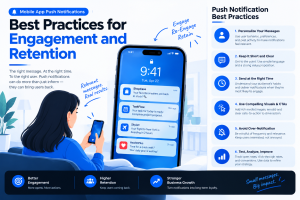
8. Push Notifications
Notifications keep customers and delivery partners informed.
Customer notifications can include:
- Order confirmation
- Preparation updates
- Delivery assignment
- Arrival notifications
- Delays
- Order completion
Driver notifications can communicate new assignments and changes to delivery instructions.
9. Admin Dashboard
A delivery platform needs more than mobile applications.
An administrative dashboard can allow businesses to manage:
- Orders
- Customers
- Delivery partners
- Vendors
- Payments
- Promotions
- Service areas
- Analytics
Role-based access can help ensure that different employees only see the information relevant to their responsibilities.
10. Ratings and Reviews
Customers can provide feedback about:
- Products
- Restaurants
- Stores
- Delivery partners
Ratings can provide useful information for both customers and platform operators.
Businesses can also use feedback to identify recurring service issues.
11. Promotions and Loyalty
Delivery businesses can use digital promotions to encourage repeat purchases.
Features may include:
- Promo codes
- Discounts
- Referral programs
- Loyalty points
- Memberships
- Personalized offers
Promotional functionality should be integrated with the ordering and payment systems so that eligibility and pricing remain clear.
12. Customer Support
Delivery involves several parties, so issues can occur at different points.
Customers may need help with:
- Missing products
- Incorrect orders
- Delays
- Payments
- Cancellations
- Refunds
In-app support can include FAQs, chat, support tickets, or other communication channels.
Connecting support with order information can help resolve issues more efficiently.
Different Types of Delivery Apps
The technical requirements vary depending on the delivery model.
Food Delivery
Food delivery applications typically require restaurant discovery, menus, customization, preparation tracking, delivery assignment, and real-time order tracking.
Grocery Delivery
Grocery platforms often need inventory synchronization, substitutions, product availability, delivery slots, and potentially large catalogs.
Courier and Parcel Delivery
Courier platforms focus heavily on shipment creation, pickup scheduling, tracking, addresses, route optimization, and delivery confirmation.
Pharmacy Delivery
These applications may require additional product and order workflows depending on the market and applicable requirements.
The product architecture should reflect the specific operational model.
Backend Architecture Matters
A delivery platform may have several systems communicating simultaneously.
For example:
Customer App
↓
API Layer
↓
Order Management
↓
Vendor / Store
↓
Delivery Management
↓
Driver App
At the same time, payment systems, notifications, maps, analytics, and customer support may interact with the platform.
A scalable backend architecture helps manage these connections as order volume increases.
Real-Time Technology
Real-time functionality is particularly important for delivery platforms.
Users may expect the application to update quickly when:
- An order is accepted
- Food is prepared
- A driver is assigned
- A driver changes location
- Delivery time changes
Depending on the requirements, technologies such as WebSockets, event-driven services, push notifications, and real-time APIs can support these experiences.
Security and Data Protection
Delivery platforms handle sensitive information.
This can include:
- Personal details
- Addresses
- Payment information
- Location data
- Order history
Security should therefore be incorporated throughout the architecture.
Authentication, authorization, encrypted communication, secure payment processing, access controls, monitoring, and appropriate data-handling practices all need consideration.
Scalability Should Be Planned Early
A delivery platform may begin with a small number of customers and vendors but eventually process large numbers of simultaneous orders.
Architecture should account for growth in:
- Users
- Orders
- Delivery partners
- Locations
- Products
- API requests
- Real-time tracking events
Cloud infrastructure, caching, database optimization, service separation, and monitoring can all contribute to scalability depending on the system requirements.
AI in Delivery Applications
AI can introduce additional capabilities into delivery platforms.
Potential applications include:
- Delivery time prediction
- Route optimization
- Demand forecasting
- Personalized recommendations
- Customer support automation
- Fraud detection
- Inventory forecasting
For example, predictive systems can use historical and real-time information to improve estimated delivery times.
AI should complement reliable operational data rather than replace it.
Choosing the Technology Stack
A delivery platform may involve several technology layers.
The final stack depends on the product’s requirements, but teams commonly evaluate:
Mobile: Native iOS/Android or cross-platform technologies
Backend: APIs, databases, cloud infrastructure, event-driven services
Real-Time: WebSockets, messaging, push notifications
Maps: Location and mapping services
Payments: Payment gateway integrations
Admin: Web-based management dashboard
Technology decisions should be based on performance, scalability, development resources, integrations, and long-term maintenance.
Build the MVP First
A delivery business does not necessarily need every feature at launch.
An MVP could focus on:
- Customer registration
- Store or restaurant discovery
- Product/menu browsing
- Cart
- Checkout
- Payment
- Order tracking
- Delivery partner workflow
- Basic admin management
Advanced personalization, loyalty, AI, analytics, and automation can be introduced as the platform matures.
Final Thoughts
Successful delivery app development requires more than building a customer-facing mobile application.
The platform needs to connect customers, vendors, delivery partners, payments, maps, notifications, and backend services into one reliable ecosystem.
The exact feature set depends on whether the product handles food, groceries, parcels, pharmacy orders, or another type of delivery.
Companies such as GeekyAnts work across mobile app development, UI/UX, backend engineering, AI-powered product engineering, and cloud technologies, helping businesses approach delivery platforms as scalable digital products rather than standalone apps.
The foundation is straightforward:
Easy ordering + reliable operations + real-time visibility + scalable technology = a stronger delivery platform.



Add Comment