


AI powered mobile applications are growing faster than most organizations expected. From virtual assistants and recommendation systems to AI driven healthcare apps and enterprise productivity tools, intelligent mobile experiences are quickly becoming part of mainstream digital ecosystems.
But while companies focus heavily on AI capabilities, many mobile applications are still entering production environments with serious security gaps.
That issue is becoming harder to ignore in 2026.
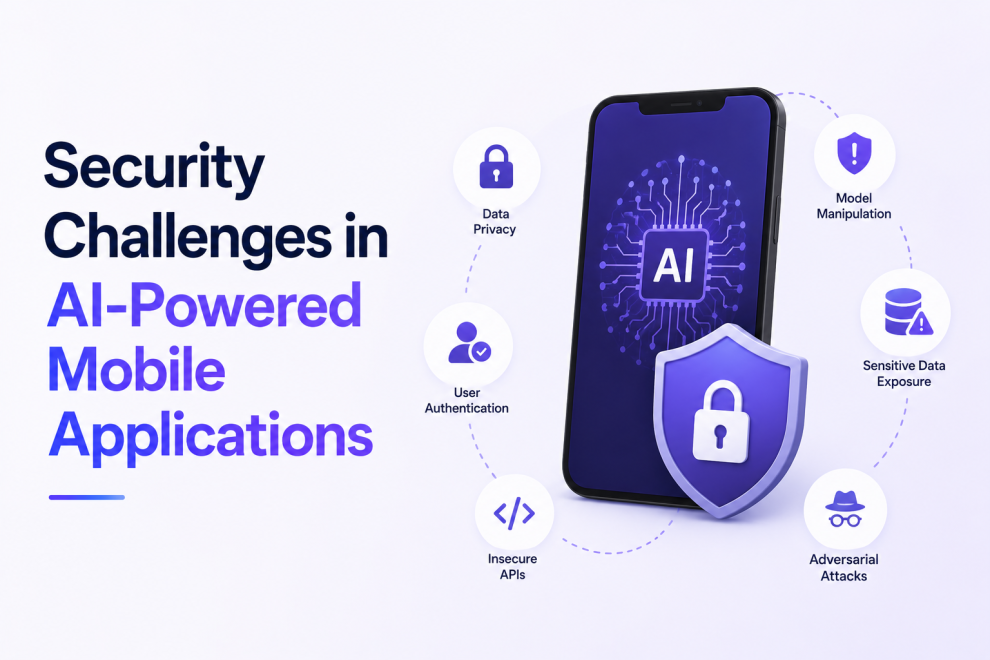
The speed of AI adoption has created pressure on product teams to prototype, launch, and iterate rapidly. In many cases, security reviews struggle to keep pace with development cycles. As a result, organizations are deploying AI powered mobile apps without fully addressing data privacy risks, insecure integrations, authentication weaknesses, or infrastructure vulnerabilities.
For enterprises, this creates operational and reputational risk.
AI systems interact with significantly larger volumes of sensitive data compared to traditional mobile applications. They process conversations, behavioral insights, user preferences, financial details, healthcare records, and contextual interactions continuously. Without strong security frameworks, these systems can expose organizations to compliance failures and trust issues very quickly.
This challenge becomes even more serious when AI generated prototypes move into production too quickly.
A recent GeekyAnts article on SOC 2 gaps in AI generated prototypes explored how many AI driven applications fail security and compliance expectations because prototype stage shortcuts often remain unresolved before production deployment.
That reflects a broader industry problem.
Many teams assume prototypes are temporary environments. But in fast moving product cycles, prototype architectures often evolve directly into production systems without proper governance, observability, or security hardening.
The result is growing security debt inside AI powered mobile ecosystems.
According to guidance from OWASP Mobile Security Project and broader cybersecurity research from NIST, AI integrated applications introduce new categories of operational risk related to model behavior, data exposure, API security, and system transparency.
This is especially relevant for mobile platforms where users expect seamless functionality without sacrificing privacy or trust.
Security is no longer a backend discussion happening after product development. In AI powered mobile applications, it directly affects usability, compliance, and long term adoption.
Why AI Changes Traditional Mobile Security Expectations
Traditional mobile applications already require strong security foundations. But AI systems introduce additional complexity because they continuously process and generate dynamic outputs.
This changes the threat landscape significantly.
AI powered apps often depend on multiple external APIs, cloud inference systems, analytics platforms, and real time data pipelines. Every additional integration increases the attack surface.
At the same time, many AI applications collect broader behavioral data than conventional apps.
For example, a standard mobile banking app may process transactions and authentication workflows. An AI enhanced banking app may additionally analyze user behavior patterns, conversational interactions, spending habits, and predictive financial insights.
That creates more sensitive data exposure points.
Another major challenge is prompt and input security.
AI systems can sometimes generate unintended responses or expose internal workflows through poorly validated prompts and insecure interaction handling. While much of the public conversation around AI security focuses on large scale enterprise systems, mobile applications are increasingly vulnerable because many operate with lightweight infrastructure protections.
Authentication complexity is also increasing.
Users expect frictionless mobile experiences, but AI powered workflows often require deeper personalization and contextual analysis. This creates tension between usability and security.
Modern mobile apps now need to balance:
- Biometric authentication
- Real time AI processing
- User privacy controls
- API security
- Session management
- Data encryption
- Compliance requirements
All of these systems must function together without slowing the experience down.
The challenge becomes even more difficult in cross platform ecosystems where applications operate across Android, iOS, tablets, wearable devices, and cloud connected services simultaneously.
Many organizations are also struggling with AI observability.
Traditional monitoring systems were not designed to track unpredictable AI driven behavior. Product teams increasingly need visibility into:
- AI decision patterns
- Data processing workflows
- API activity
- Prompt interactions
- Security anomalies
- User behavior signals
Without observability, detecting vulnerabilities becomes much harder.
Companies like Google Cloud, Microsoft Azure, and IBM continue influencing enterprise AI security practices as organizations work toward safer deployment standards for intelligent applications.
The Growing Risk of Shipping AI Products Too Fast
One of the biggest security problems in AI powered mobile development is speed.
Companies want faster releases because AI markets move quickly. Product teams feel pressure to launch prototypes, validate concepts, and compete aggressively. But accelerated release cycles often reduce time for infrastructure hardening and compliance reviews.
This creates hidden vulnerabilities.
Prototype environments commonly contain:
- Temporary authentication logic
- Incomplete encryption systems
- Weak API protections
- Limited access controls
- Minimal audit logging
- Unsecured third party integrations
When these systems remain unresolved during production deployment, security risks increase significantly.
AI generated code introduces another layer of complexity.
Many development teams now use AI assisted coding tools to accelerate feature delivery. While these tools improve productivity, they can also generate insecure implementation patterns if teams fail to review outputs carefully.
This is why production readiness discussions are becoming more important across AI product development.
Security teams increasingly push organizations to treat AI applications differently from traditional software products because the operational behavior is more dynamic and difficult to predict.
Another growing issue is regulatory pressure.
Enterprises operating in healthcare, fintech, insurance, and enterprise SaaS environments must comply with strict privacy and governance standards. AI powered mobile systems processing sensitive information face additional scrutiny around transparency, consent management, and data retention.
This is especially relevant in North America where enterprise customers increasingly evaluate security posture before adopting AI enabled platforms.
Users are becoming more cautious as well.
Consumers may experiment with AI features quickly, but trust disappears fast after security incidents or unclear data handling practices. Mobile applications relying heavily on AI interactions need stronger transparency around how information is processed and protected.
Security design is now part of user experience itself.
What Mobile Product Teams Should Prioritize in 2026
For mobile product leaders, engineering teams, and AI focused startups, the next phase of AI application development requires stronger operational discipline around security.
Several priorities are becoming increasingly important.
First, organizations should treat prototype security as part of production planning from the beginning. Temporary shortcuts often become permanent vulnerabilities later.
Second, teams need stronger visibility into AI system behavior. Monitoring, logging, and observability frameworks should extend beyond infrastructure performance into AI interaction patterns and data workflows.
Third, security reviews should include AI specific risks rather than focusing only on traditional mobile vulnerabilities. Prompt handling, model behavior, API orchestration, and AI generated outputs require additional oversight.
Fourth, organizations should prioritize privacy transparency. Users increasingly want clarity around what AI systems collect, store, and process during mobile interactions.
Most importantly, companies should recognize that AI powered mobile applications operate differently from traditional digital products.
The risks are broader. The data flows are more dynamic. The infrastructure dependencies are deeper. And user trust is significantly harder to recover after security failures.
As AI adoption continues accelerating across mobile ecosystems, the organizations gaining long term advantage will likely be the ones balancing innovation speed with operational security maturity.
That balance is quickly becoming one of the defining challenges in modern mobile app development.
For product teams preparing the next generation of AI powered mobile experiences, security can no longer be treated as a final stage checklist before launch. It is becoming part of the product foundation itself.



Add Comment