



The mobile app landscape is evolving faster than ever. Businesses are no longer competing solely on design, performance, or feature count. Instead, the next generation of successful applications is being built around intelligence.
AI-native mobile apps are emerging as the new standard for enterprises looking to improve customer experiences, increase operational efficiency, and accelerate digital transformation. Rather than treating artificial intelligence as an optional feature, these applications integrate AI into every stage of the user journey.
For enterprise leaders, this shift represents a significant opportunity to create mobile experiences that are more personalized, proactive, and scalable.
The Rise of AI-Native Mobile Development
Traditional mobile apps rely heavily on predefined workflows. Users navigate menus, search for information, and manually complete repetitive tasks.
AI-native applications change this experience by understanding user behavior, predicting intent, and offering intelligent recommendations in real time.
Whether it’s assisting field employees, streamlining customer support, or personalizing shopping experiences, AI enables mobile apps to become active participants rather than passive tools.
Personalization Is Becoming a Competitive Advantage
Modern users expect mobile applications to understand their preferences and deliver relevant experiences instantly.
AI makes this possible by analyzing user interactions and continuously adapting to individual behavior.
Common enterprise use cases include:
- Personalized dashboards
- Smart search
- AI-powered recommendations
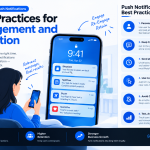
- Predictive notifications
- Voice-based interactions
- Intelligent workflow automation
These capabilities improve engagement while reducing the time users spend completing routine tasks.
Performance and Scalability Cannot Be Compromised
As AI capabilities expand, enterprise mobile applications must continue to deliver fast, reliable performance.
Organizations should prioritize:
- Cloud-native architecture
- Efficient API management
- Cross-platform compatibility
- Real-time synchronization
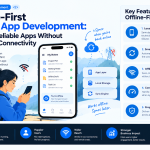
- Offline functionality
- Scalable backend infrastructure
Building for scale from the beginning allows businesses to introduce new AI capabilities without disrupting existing user experiences.
Security Must Evolve Alongside AI
Enterprise mobile apps frequently manage confidential business information and customer data.
To maintain trust, organizations should implement:
- Secure authentication
- End-to-end encryption
- Privacy-first AI models
- Role-based access controls
- Continuous security monitoring
- Compliance with industry regulations
Strong security practices help enterprises innovate responsibly while protecting sensitive information.
User Experience Drives AI Adoption
Even the most advanced AI models cannot compensate for poor user experience.
Successful mobile applications focus on:
- Simple navigation
- Fast interactions
- Explainable AI recommendations
- Accessible interfaces
- Consistent design patterns
- Seamless onboarding
When AI feels intuitive rather than intrusive, users are more likely to trust and adopt new features.
Industry Perspective
Across the enterprise technology ecosystem, organizations are increasingly combining AI, cloud engineering, UX design, and mobile development into integrated product strategies. Companies such as GeekyAnts have showcased enterprise mobile solutions across industries including healthcare, fintech, retail, and SaaS, reflecting a broader industry movement toward building AI-native applications that prioritize both technical excellence and long-term user adoption.
What the Future Looks Like
The next wave of enterprise mobile innovation will be shaped by intelligent assistants, multimodal interfaces, predictive automation, and context-aware experiences.
Organizations that begin investing in AI-native mobile architecture today will be better prepared to adapt as user expectations continue to evolve and new AI capabilities become mainstre




Add Comment