

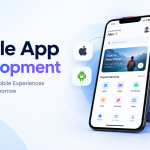
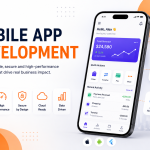


Mobile applications are no longer just digital versions of websites. They have become essential business platforms that connect employees, customers, and operations in real time.
As artificial intelligence becomes embedded into enterprise software, the next generation of mobile applications is shifting toward AI-native experiences—apps designed from the ground up to understand context, automate tasks, and continuously improve user interactions.
This evolution is redefining enterprise mobility.
What Makes an App AI-Native?
Unlike traditional applications that add AI as a feature, AI-native apps are built with intelligence at their core.
They can:
- Understand natural language
- Personalize user journeys
- Automate repetitive workflows
- Recommend next actions
- Generate business insights
- Learn from user interactions
These capabilities enable mobile applications to become proactive business tools rather than passive interfaces.
Business Advantages
Organizations adopting AI-native mobile applications benefit from:
- Improved workforce productivity
- Faster customer support
- Better operational efficiency
- Personalized user experiences
- Increased application engagement
- Smarter decision-making
These improvements create measurable value across enterprise operations.
Building Enterprise-Ready Mobile Apps
Successful AI-powered mobile applications require a strong technical foundation.
Key priorities include:
- Cloud-native infrastructure
- Secure APIs
- Cross-platform development
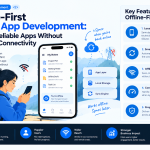
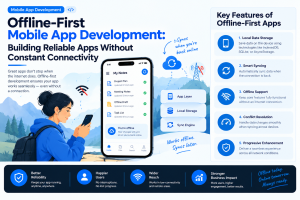
- Offline synchronization
- Scalable backend architecture
- High-performance user interfaces
Combining intelligent features with reliable engineering ensures long-term scalability.
Security Cannot Be an Afterthought
Enterprise applications frequently manage sensitive customer and business information.
Essential practices include:
- End-to-end encryption
- Multi-factor authentication
- Secure API management
- Privacy-first AI implementation
- Role-based access controls
- Compliance monitoring
Security remains fundamental to user trust and enterprise adoption.
Industry Perspective
Across enterprise software development, organizations are increasingly integrating AI, mobile engineering, UX design, cloud infrastructure, and product strategy into unified product engineering practices. Companies such as GeekyAnts have publicly showcased enterprise mobile solutions that reflect this broader industry movement toward building intelligent, scalable, and user-focused applications.
Conclusion
AI-native mobile applications represent the next phase of enterprise mobility.
Organizations that invest in intelligent experiences, scalable architectures, and user-centered design today will be better prepared to deliver mobile applications that improve productivity, strengthen customer engagement, and create long-term competitive advantages.



Add Comment